
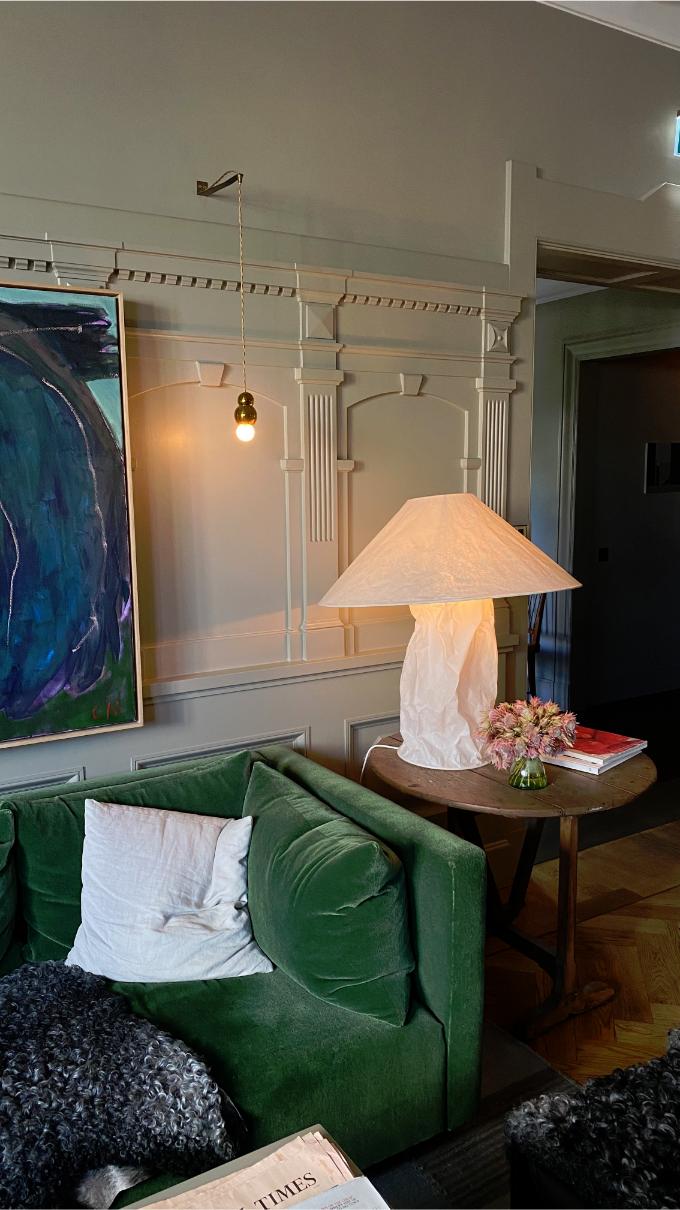
Your home is more than a collection of rooms.
It is where your life unfolds, where your habits take shape, where comfort meets ambition, and where aesthetics quietly influence how you feel every single day.
Yet many homeowners underestimate how profoundly design impacts daily living. They know something feels off (a lack of harmony, wasted space, or a style that no longer reflects who they ar) but they struggle to articulate or resolve it. Pinterest boards grow, decisions stall, and the project remains unfinished.
- 1 Vision, Value, and the Power of Professional Design
- 2 The Hidden Cost of Designing Alone
- 3 What an Interior Designer Really Does ?
- 4 The Value of a Thoughtful Design Vision
- 5 A Home That Reflects Who You Are
- 6 Time-Saving Without Compromise
- 7 Before & After: More Than a Visual Change
- 8 Design as a Long-Term Investment
- 9 High-End Thinking, Accessible Approach
- 10 A Partnership Built on Trust
- 11 The Emotional Impact of Coming Home
- 12 From First Consultation to a Fully Realized Home
- 13 Step One: The Initial Consultation, Listening Before Designing
- 14 Step Two: Defining the Design Direction
- 15 Step Three: Space Planning & Flow Optimization
- 16 Step Four: Material, Color & Texture Selection
- 17 Step Five: Furniture & Interior Styling
- 18 Step Six: Execution Support & Coordination
- 19 Common Client Challenges — And How a Decorator Solves Them
- 20 The Emotional Shift: From House to Home
- 21 Accessible Elegance Through Intelligent Design
- 22 Long-Term Value, Modern Lifestyles, and the Intelligence of Thoughtful Interiors
- 23 Beyond Beauty: Interior Design as Long-Term Value
- 24 Timeless Design in a Trend-Driven World
- 25 Adapting to Modern Living
- 26 Designing for How You Actually Live
- 27 Before & After: The Subtle Power of Intelligent Design
- 28 Emotional Sustainability: Living Well, Every Day
- 29 Custom Solutions, Not Standard Answers
- 30 High-End Thinking Without Excess
- 31 When Design Becomes Effortless
- 32 Choosing an Interior Decorator and Beginning Your Home’s Transformation
- 33 When Is the Right Time to Hire an Interior Decorator?
- 34 What Really Happens When You Take the First Step ?
- 35 A Collaborative Relationship, Not a Transaction
- 36 From Intention to Reality
- 37 A Home That Grows With You
- 38 More Than a Service: An Experience
- 39 The True Meaning of Investment
- 40 Your Home, Reimagined
- 41 A Soft Invitation to Begin
Vision, Value, and the Power of Professional Design
This is where the expertise of an interior designer such as DesignByAnais becomes transformative.
Hiring a professional interior decorator is not about luxury for luxury’s sake. It is about clarity, coherence, and creating a home that works beautifully for you, visually, functionally, and emotionally. It is about translating your ideas into a refined, livable reality, without the stress, hesitation, or costly mistakes that often accompany DIY design.
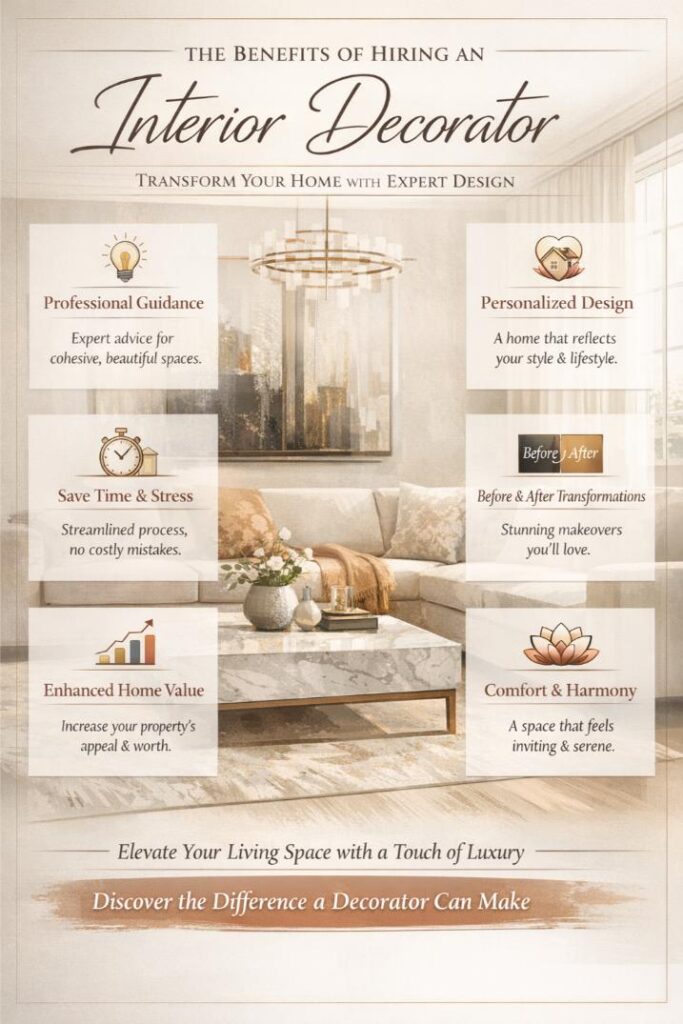
Interior Designer such as Design By Anais
In this article, we explore why working with an interior decorator is one of the most valuable decisions you can make for your home, and how a thoughtful, client-centered design process can elevate both your space and your lifestyle.
The Hidden Cost of Designing Alone
Many homeowners begin with enthusiasm and inspiration. They collect images, visit showrooms, and imagine a transformed space. But soon, uncertainty sets in.
- Which style truly fits my home and my life?
- Why doesn’t this furniture look the way it did in the store?
- How do I balance aesthetics with everyday practicality?
- Am I making choices I’ll regret in a year?
Designing without professional guidance often leads to fragmented results: beautiful individual pieces that don’t work together, rooms that feel cluttered or unfinished, and layouts that fail to support real-life movement and use.
Beyond aesthetics, there is also the cost of time, energy, and money. Replacing mistakes, returning unsuitable items, or redoing work can quickly exceed the cost of hiring a decorator from the start.
An interior decorator brings perspective, structure, and expertise—helping you move forward with confidence instead of doubt.
What an Interior Designer Really Does ?
Contrary to common misconceptions, interior decoration is not about imposing a signature style or simply choosing cushions and colors. It is a strategic, creative service rooted in listening, analysis, and precision.
A professional interior decorator:
- Interprets your needs, preferences, and lifestyle
- Creates a cohesive design vision tailored to your space
- Optimizes layout, flow, and proportions
- Selects materials, colors, furnishings, and finishes that work together
- Ensures consistency from concept to final styling
- Supports execution, sourcing, and coordination
The result is not just a “pretty home,” but a space that feels intentional, balanced, and unmistakably yours.
The Value of a Thoughtful Design Vision
Every successful interior begins with a clear concept.
This design vision acts as a guiding thread ; ensuring that every decision, from wall color to lighting placement, contributes to a harmonious whole. Without it, interiors often feel disjointed, even when individual elements are beautiful.
An interior decorator develops this vision by understanding:
- Your personal taste and aesthetic sensibility
- How you use each space daily
- The architectural strengths and limitations of your home
- Your long-term goals for the property
This is where professional design elevates a project. Instead of reacting to trends or isolated ideas, the decorator creates a framework that allows your home to evolve cohesively over time.
A Home That Reflects Who You Are
One of the most underestimated benefits of working with an interior decorator is personalization.
Your home should not look like a showroom or a copy of a trend : it should tell your story. A professional decorator knows how to balance inspiration with individuality, ensuring your space reflects your identity rather than someone else’s aesthetic.
This might mean:
- Blending contemporary lines with sentimental pieces
- Creating calm, minimal interiors that still feel warm and lived-in
- Designing family-friendly spaces that remain elegant
- Incorporating cultural references, art, or textures that hold meaning
The result is subtle yet powerful: a home that feels authentic, expressive, and emotionally resonant.
Time-Saving Without Compromise
Designing a home requires hundreds of decisions—many of them technical, interconnected, and time-sensitive. For homeowners balancing work, family, and personal life, this can quickly become overwhelming.
An interior decorator streamlines the entire process.
By narrowing options, anticipating challenges, and managing details, the decorator saves you time while maintaining design integrity. You benefit from professional efficiency without sacrificing creativity or quality.
Instead of spending weekends second-guessing choices, you gain clarity and peace of mind—knowing every decision is part of a carefully considered plan.
Before & After: More Than a Visual Change
Consider a common scenario:
A living room filled with mismatched furniture, poor lighting, and unused corners. The homeowners feel disconnected from the space : they avoid hosting, feel constantly dissatisfied, and sense that the room doesn’t reflect their lifestyle.
After working with an interior decorator:
- The layout is reconfigured to improve flow and conversation
- Lighting is layered to create warmth and flexibility
- A refined color palette unifies the space
- Custom styling adds depth, texture, and personality
The transformation is not only visual. The room becomes inviting, functional, and emotionally rewarding. The homeowners begin to use and enjoy their space in ways they never did before.
This is the true power of professional design: it changes how you live.
Design as a Long-Term Investment
Beyond immediate comfort and beauty, professional interior decoration adds lasting value to your home.
Thoughtful design choices:
- Enhance spatial efficiency
- Improve perceived quality and craftsmanship
- Increase market appeal and resale value
- Reduce the need for frequent updates or corrections
A well-designed interior ages gracefully. It adapts to changing needs while maintaining coherence—a balance that is difficult to achieve without professional insight.
Whether you plan to stay for years or eventually sell, interior decoration is an investment in both quality of life and property value.
High-End Thinking, Accessible Approach
A refined interior does not require excess or extravagance. It requires intention.
A skilled interior decorator knows how to allocate budget wisely—investing where it matters most and finding creative solutions where flexibility is possible. This approach makes high-end design principles accessible without compromising on elegance or functionality.
The goal is not to overspend, but to spend well.
A Partnership Built on Trust
At its core, interior decoration is a collaborative process.
The decorator listens, guides, and refines : never overshadowing the client’s voice. Through transparent communication and a structured process, trust develops naturally.
You are not handing over control; you are gaining a partner who translates your vision into a refined, livable design.
The Emotional Impact of Coming Home
There is a quiet luxury in walking into a space that feels right.
A home designed with care supports your mood, your routines, and your sense of self. It offers calm after long days, inspiration in the morning, and comfort in moments of rest.
This emotional dimension is often invisible : but deeply felt.
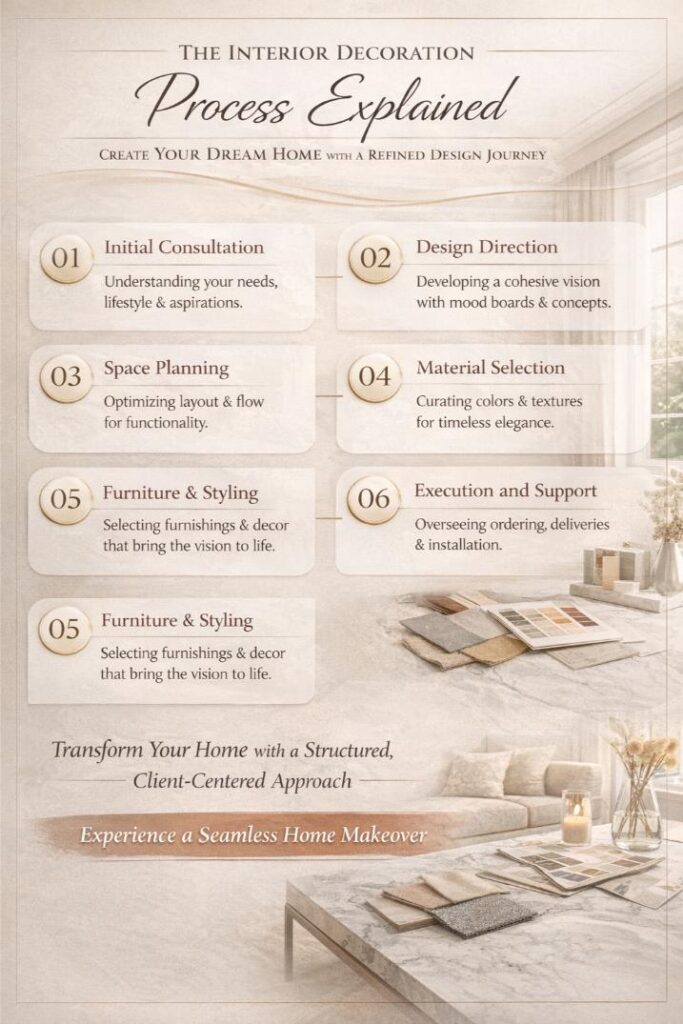
Professional interior decoration is not about decoration alone. It is about creating environments that support well-being, identity, and modern living.
In the next part of this article, we will explore the interior design process in detail ; from the first consultation to concept development, material selection, and execution support. You will discover how a structured approach ensures clarity, creativity, and results that endure.
If you are considering transforming your home, this journey begins with understanding how design truly works ; behind the scenes and beyond the surface.
From First Consultation to a Fully Realized Home
Understanding how an interior decorator works is often the key reassurance homeowners need before committing. What happens after the first contact? How are ideas translated into concrete decisions? And how does a vision become a finished space that feels both refined and effortless?
Professional interior decoration is not improvised. It follows a structured yet flexible process designed to protect your investment, respect your lifestyle, and deliver a coherent result. Each phase builds upon the previous one, ensuring clarity, consistency, and confidence at every step.
Step One: The Initial Consultation, Listening Before Designing
Every successful project begins with listening.
The first consultation is not about colors or furniture catalogs. It is about understanding you. Your habits, your expectations, your frustrations, and your aspirations for your home.
During this phase, an interior decorator explores:
- How you live in your space on a daily basis
- What works, what doesn’t, and why
- Your aesthetic sensibilities and inspirations
- Your long-term goals for the home
- Practical constraints such as budget, timelines, and existing elements to retain
This conversation sets the foundation for a truly client-centered design. It ensures that decisions made later are rooted in real needs—not assumptions or trends.
More importantly, it establishes trust. You are not hiring a stylist to decorate a space; you are engaging a professional to interpret your lifestyle through design.
Step Two: Defining the Design Direction
Once your needs are clearly understood, the decorator translates them into a cohesive design direction.
This phase often includes:
- Concept development
- Mood boards or visual references
- Color palette definition
- Material and texture exploration
- Preliminary layout considerations
The goal is to create a clear, shared vision before moving into detailed decisions. This design framework acts as a compass, guiding every choice that follows.
At this stage, clients often experience a sense of relief. Abstract ideas finally take shape. What once felt overwhelming becomes structured and intentional.
Step Three: Space Planning & Flow Optimization
A beautiful interior must also function seamlessly.
Space planning is one of the most technical and impactful aspects of interior decoration. It determines how you move through your home, how rooms interact, and how each square meter is used.
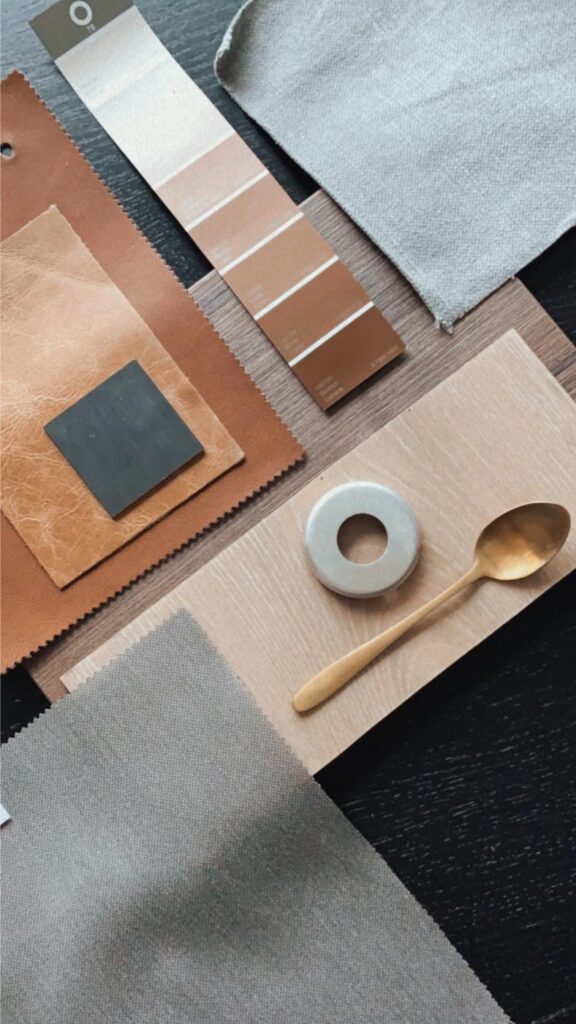
An interior decorator analyzes:
- Circulation paths and spatial flow
- Furniture proportions and placement
- Natural light and sightlines
- Storage needs and opportunities
- Balance between openness and intimacy
Small adjustments in layout can dramatically improve comfort and usability. A room may suddenly feel larger, calmer, and more intuitive—without adding a single square meter.
This is where professional expertise truly shines. Good design is often invisible, but its effects are immediately felt.
Step Four: Material, Color & Texture Selection
Materials define the sensory experience of a home.
From the warmth of wood to the softness of textiles, from matte finishes to subtle contrasts, these choices shape how a space feels—not just how it looks.
An interior decorator curates materials with intention, considering:
- Durability and maintenance
- Light interaction and color depth
- Harmony between surfaces
- Tactile comfort
- Long-term aesthetic relevance
Rather than following fleeting trends, the focus is on timeless combinations that age gracefully. The result is an interior that feels contemporary yet enduring.
Clients often discover materials they would never have chosen alone—but quickly fall in love with once they see how everything connects.
Step Five: Furniture & Interior Styling
Furniture is the architecture within architecture.
Choosing the right pieces involves far more than aesthetics. Scale, proportion, comfort, and placement all play a critical role in how a room functions and feels.
An interior decorator ensures that:
- Furniture fits the space without overwhelming it
- Each piece contributes to the overall design narrative
- Seating arrangements support conversation and relaxation
- Storage solutions remain discreet yet efficient
- Decorative elements add character without clutter
Interior styling is where the space gains its soul. Carefully selected lighting, textiles, art, and accessories bring depth, rhythm, and personality to the design.
The result is a home that feels complete—but never overdone.
Step Six: Execution Support & Coordination
One of the most valuable yet often overlooked services an interior decorator provides is execution support.
Design does not end with a concept. Without proper follow-through, even the most beautiful plans can fall short.
Depending on the scope of the project, this phase may include:
- Sourcing furniture and materials
- Liaising with suppliers and craftsmen
- Coordinating deliveries and installations
- Advising during on-site implementation
- Ensuring design consistency throughout execution
This support protects the integrity of the original vision. It also relieves clients from logistical stress, allowing them to enjoy the process rather than manage it.
Common Client Challenges — And How a Decorator Solves Them
Many clients come with similar concerns, regardless of budget or home size.
“I’m afraid of making the wrong choices.”
A decorator replaces uncertainty with professional guidance and tested solutions.
“My space feels disjointed.”
A clear design vision creates coherence across rooms and elements.
“I don’t have time for this.”
The decorator streamlines decisions and manages complexity.
“I want something unique, not generic.”
Custom solutions ensure your home reflects you, not trends.
By addressing these challenges holistically, interior decoration becomes a reassuring, empowering experience.
The Emotional Shift: From House to Home
One of the most profound outcomes of professional interior decoration is emotional.
Clients often describe feeling calmer, more grounded, and more connected to their home after the transformation. Daily routines become smoother. Hosting becomes a pleasure. Personal spaces feel restorative rather than chaotic.
This emotional alignment is not accidental. It is the result of intentional design that respects both form and feeling.
A well-designed interior supports who you are—and who you are becoming.
Accessible Elegance Through Intelligent Design
Luxury in interior decoration is not defined by price tags, but by thoughtfulness.
A professional decorator knows how to elevate a space through proportion, balance, and detail—sometimes using very simple elements. By prioritizing quality over quantity and coherence over excess, elegance becomes accessible and sustainable.
This approach ensures that your investment delivers lasting value—not just visual impact.
In the next part, we will explore how professional interior decoration enhances long-term property value, adapts to modern lifestyles, and supports evolving needs. We will also look at how design choices today influence how your home lives tomorrow.
If you are seeking more than surface-level change, if you want a home that truly supports your life, this perspective is essential.
Long-Term Value, Modern Lifestyles, and the Intelligence of Thoughtful Interiors
Interior decoration is often perceived as an aesthetic upgrade—something visual, immediate, and surface-level. In reality, its most powerful impact unfolds over time. A professionally designed home does not simply look better on the day it is finished; it lives better for years to come.
This is where professional interior decoration distinguishes itself from decorative impulse. It is not about short-lived trends or visual novelty, but about creating spaces that remain relevant, functional, and emotionally satisfying as life evolves.
Beyond Beauty: Interior Design as Long-Term Value
A well-designed interior is a strategic asset.
From a real estate perspective, homes that demonstrate coherence, quality, and intelligent space planning consistently outperform those that do not. Buyers—and even long-term occupants—respond instinctively to spaces that feel balanced, refined, and well thought out.
Professional interior decoration adds value by:
- Enhancing spatial clarity and flow
- Highlighting architectural strengths
- Creating visual continuity throughout the home
- Elevating perceived quality through finishes and details
- Reducing the need for future redesign or corrective work
Even when resale is not an immediate goal, these elements contribute to a stronger, more resilient property value over time.
Design choices made with foresight protect your investment.
Timeless Design in a Trend-Driven World
Design trends are inspiring—but they are also fleeting.
A professional interior decorator understands how to interpret contemporary influences without becoming dependent on them. The goal is not to freeze your home in a specific era, but to create a foundation that can evolve gracefully.
This is achieved through:
- Neutral, layered base palettes
- Timeless materials with character
- Clean, adaptable layouts
- Carefully chosen statement elements
- Flexible styling that can be refreshed without redesign
Instead of chasing trends, your interior quietly absorbs them ; remaining modern without ever feeling dated.
Adapting to Modern Living
Today’s homes are asked to do more than ever before.
They must support remote work, social gatherings, family life, rest, and personal expression—often within the same spaces. Interior decoration plays a critical role in making this complexity feel effortless.
A professional decorator anticipates modern needs such as:
- Multi-functional rooms
- Seamless transitions between work and relaxation
- Thoughtful storage to reduce visual clutter
- Lighting schemes that adapt throughout the day
- Zones that balance privacy with connection
Rather than reacting to lifestyle changes after they occur, design can proactively support them.
Designing for How You Actually Live
One of the most common mistakes in DIY design is prioritizing appearance over reality.
A sofa that looks beautiful but is uncomfortable. A dining area too tight for daily use. A bedroom that photographs well but feels cold and impersonal.
Interior decoration, when done professionally, begins with life—not images.
A decorator designs for:
- Daily routines
- Movement patterns
- Emotional needs
- Practical constraints
- Long-term comfort
This human-centered approach ensures your home supports you intuitively—without requiring constant adjustment or compromise.
Before & After: The Subtle Power of Intelligent Design
Not all transformations are dramatic at first glance. Some are subtle, but profoundly effective.
A narrow hallway becomes a calm transition space through lighting and proportion.
A cluttered open-plan room gains structure through zoning and material continuity.
A bedroom evolves from generic to deeply personal through texture, color balance, and scale.
These changes may not shout—but they resonate.
Clients often say their home feels “lighter,” “clearer,” or “more peaceful” after working with a decorator. These are not decorative effects; they are design outcomes.
Emotional Sustainability: Living Well, Every Day
A thoughtfully designed interior supports emotional well-being.
Visual calm reduces stress. Order encourages clarity. Warmth fosters comfort. Beauty inspires pride and connection.
Over time, these elements influence how you feel at home—often without conscious awareness.
This emotional sustainability is one of the most valuable aspects of professional interior decoration. It ensures that your home continues to give back to you, day after day.
Custom Solutions, Not Standard Answers
No two homes, and no two client, are the same.
Professional interior decoration is rooted in customization. Solutions are developed specifically for your space, your needs, and your aspirations.
This may include:
- Custom furniture or built-ins
- Tailored color palettes
- Bespoke styling elements
- Personalized spatial solutions
- Selective preservation of existing pieces
The result is not a formula—but a reflection.
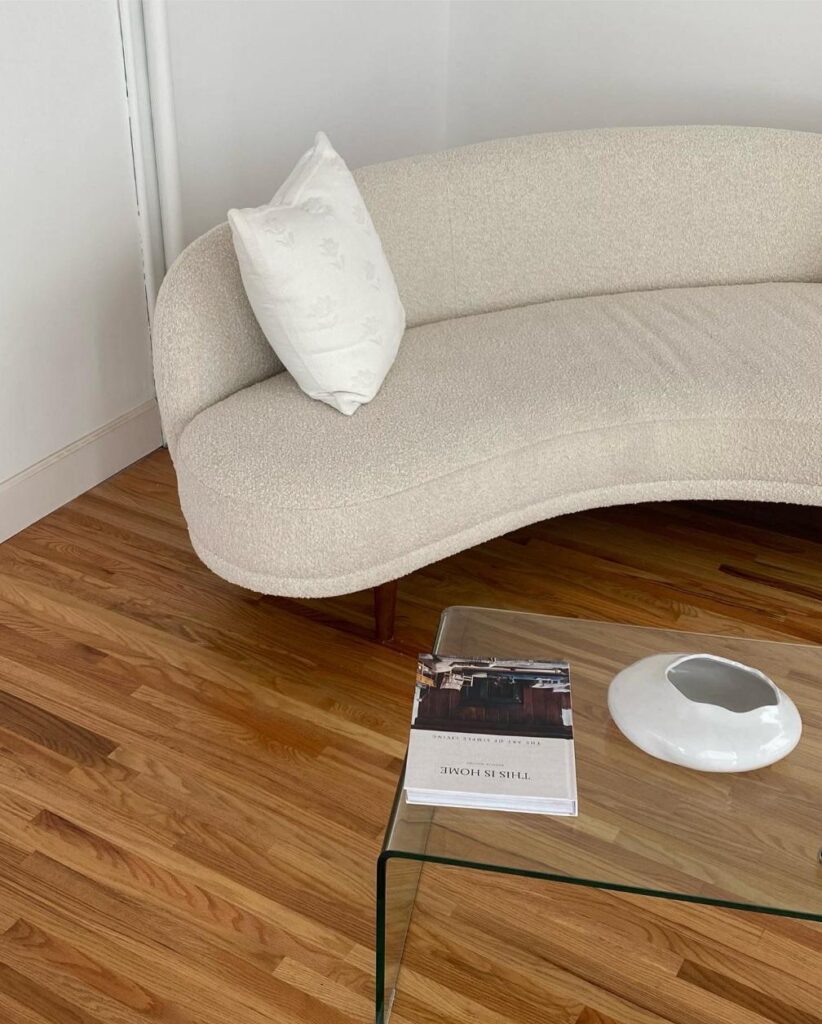
High-End Thinking Without Excess
Luxury today is defined by intention, not accumulation.
A refined interior does not overwhelm, it reassures. It feels curated rather than crowded, intentional rather than imposed.
An interior decorator applies high-end design thinking by:
- Prioritizing proportion and balance
- Editing rather than adding
- Investing in quality where it matters
- Creating visual breathing room
- Allowing materials and light to speak
This philosophy results in spaces that feel elevated yet approachable—designed to be lived in, not merely admired.
When Design Becomes Effortless
The ultimate success of interior decoration is when design disappears into daily life.
You stop thinking about what doesn’t work. You stop rearranging, replacing, or questioning. Your home simply supports you.
This ease is not accidental. It is the outcome of experience, structure, and thoughtful decision-making.
In the final part of this article, we will focus on the decision to hire an interior decorator, what it means, when the timing is right, and how to take the first step with confidence. We will also explore how a consultation can clarify your vision and open new possibilities for your home.
If you are standing at the threshold of transformation, the final piece will help you move forward with intention.
Choosing an Interior Decorator and Beginning Your Home’s Transformation
Every transformation begins with a decision.
Not the decision to buy a new sofa or repaint a wall, but the decision to approach your home with intention. To stop guessing. To stop compromising. To stop living in a space that feels almost right, but never quite complete.
Hiring an interior decorator is not about giving up control. It is about gaining clarity, direction, and confidence—guided by professional expertise.
This final part brings everything together: the why, the when, and the how of choosing to work with an interior decorator, and what that choice truly represents for your home and your life.
When Is the Right Time to Hire an Interior Decorator?
There is a common misconception that interior decorators are only needed for large renovations or empty homes. In reality, the right time is far more personal.
You may be ready to hire an interior decorator if:
- Your home no longer reflects who you are
- You feel overwhelmed by choices and options
- Your space lacks cohesion, flow, or warmth
- You are planning a renovation, move, or life transition
- You want to invest wisely rather than experiment blindly
- You crave a home that feels intentional and refined
Often, the strongest indicator is emotional: a quiet dissatisfaction you can’t quite define—but feel every day.
That feeling is not a failure of taste. It is simply a sign that professional guidance would make all the difference.
What Really Happens When You Take the First Step ?
Reaching out to an interior decorator is not a commitment, it is a conversation.
An initial consultation offers clarity long before any decisions are finalized. It allows you to express your concerns, explore possibilities, and understand what is achievable within your space and budget.
Many clients are surprised by how reassuring this first step feels. What once felt heavy becomes lighter. What felt confusing gains structure.
You don’t need all the answers. You only need the willingness to begin.
A Collaborative Relationship, Not a Transaction
Interior decoration is a partnership.
The decorator brings expertise, perspective, and creative vision. You bring your lifestyle, preferences, and personal story. Together, these elements form a dialogue, one that evolves into a space that feels both elevated and deeply personal.
This collaboration ensures that:
- Your voice remains central throughout the process
- Decisions are explained, not imposed
- Design solutions are tailored, not generic
- Trust replaces uncertainty
- Creativity is guided by purpose
The result is not just a finished interior : but a process that feels respectful, inspiring, and empowering.
From Intention to Reality
One of the most powerful aspects of working with an interior decorator is momentum.
What once lingered as an idea finally moves forward. Rooms stop waiting. Decisions stop lingering. The project gains direction, and with it, confidence.
Each phase builds naturally on the last. You see progress. You feel alignment. And gradually, your home begins to take shape in a way that feels effortless and inevitable.
This is design with intention.
A Home That Grows With You
A professionally designed interior does not lock you into a moment : it evolves with you.
Because it is built on strong foundations, it adapts to life’s changes: new routines, new priorities, new chapters. Furniture can shift. Styling can evolve. But the structure remains coherent.
This flexibility is one of the greatest luxuries of thoughtful design.
Your home becomes a living framework—supporting who you are today, and who you will become tomorrow.
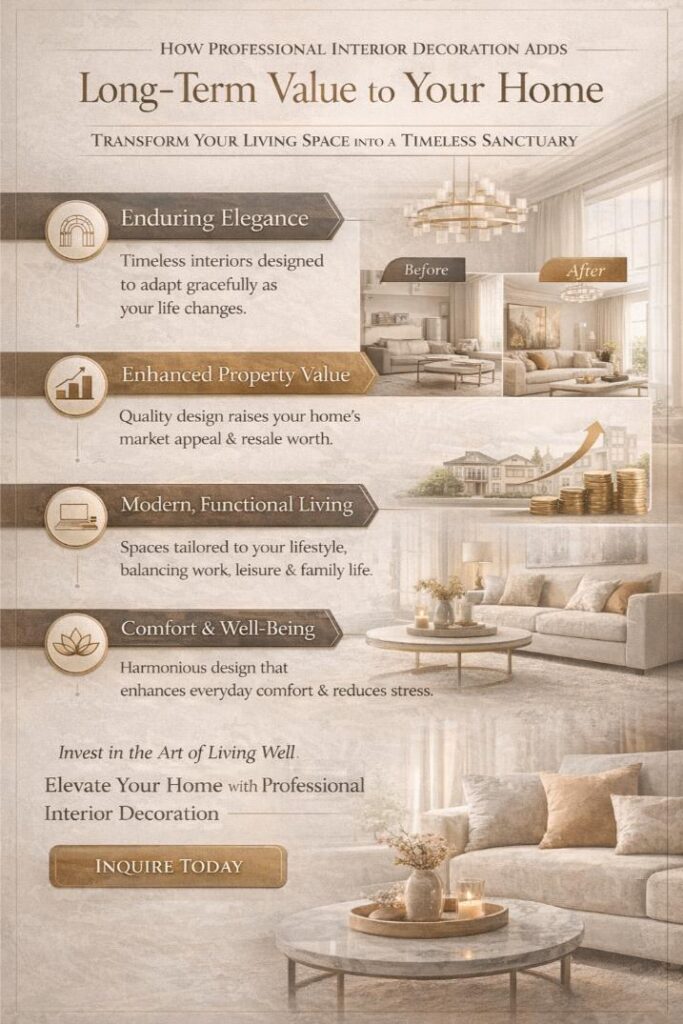
More Than a Service: An Experience
Interior decoration is not just about outcomes. It is about how the process feels.
When done well, it replaces stress with clarity, doubt with confidence, and fragmentation with harmony. It allows you to enjoy the journey—not just the result.
Clients often describe the experience as unexpectedly emotional. Seeing their home finally reflect them brings a sense of grounding, pride, and calm that extends far beyond aesthetics.
This is the quiet power of professional design.
The True Meaning of Investment
Investing in interior decoration is not indulgence : it is discernment.
You are investing in:
- Your daily comfort
- Your emotional well-being
- Your time and peace of mind
- The long-term value of your home
- A space that supports your lifestyle
When you consider how much time you spend at home, the impact of this investment becomes clear.
A well-designed home pays you back—every single day.
Your Home, Reimagined
There is a moment in every project when clients walk into their transformed space and pause.
Not because it is dramatic ; but because it feels right.
Everything aligns. Nothing feels forced. The space feels complete, calm, and unmistakably theirs.
That moment is not accidental. It is the result of expertise, intention, and collaboration.
A Soft Invitation to Begin
If you are considering redesigning your home, whether a single room or an entire space—this may be the right time to explore working with an interior decorator.
Not to follow trends.
Not to impress.
But to create a home that truly supports how you live.
A conversation is often all it takes to begin seeing your space differently.
And sometimes, that first conversation is the most important design decision of all.